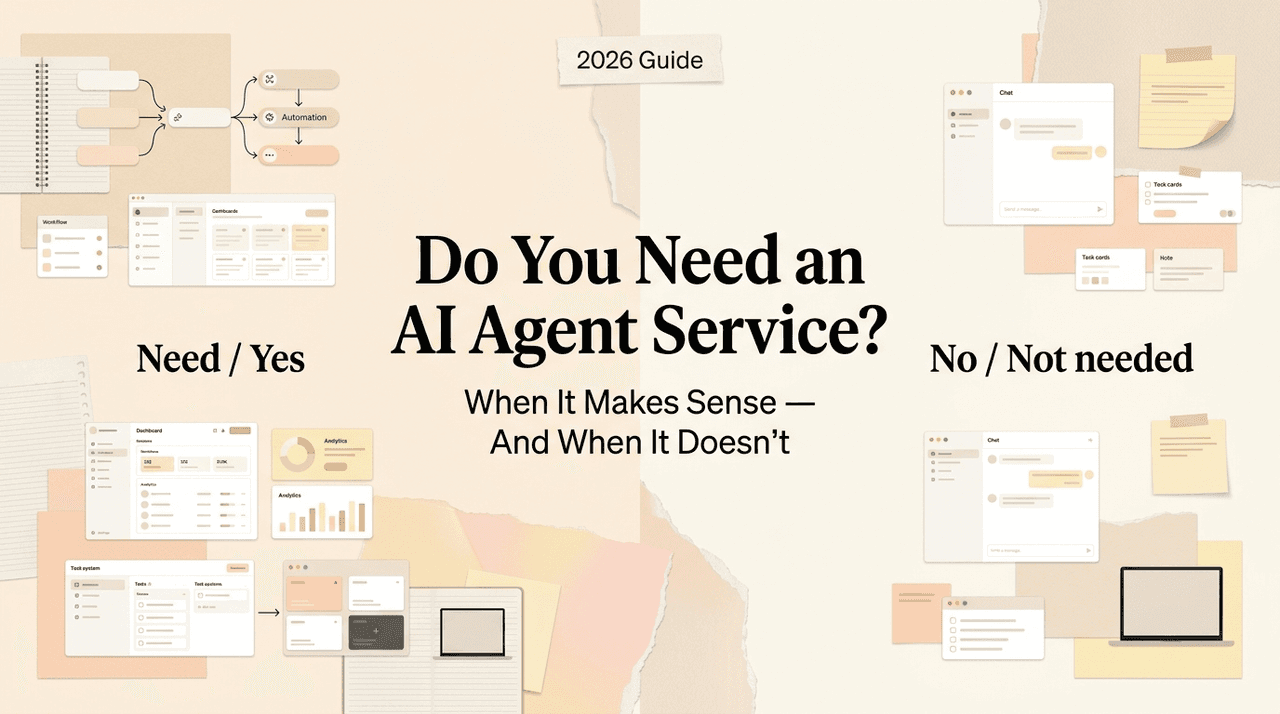
Hello, Nova is coming. I've been down this rabbit hole more than once. You see your workflow getting clunky, you hear "AI agent" thrown around in every newsletter, and your brain starts asking: should I just hire someone to build one for me?
Before I got clearer on this, I almost pulled the trigger on a development quote that felt exciting but vague. The agency's deck was polished. Their case studies looked great. But when I started asking specific questions, the answers got fuzzy fast.
I'm glad I slowed down. So here's what I actually learned about AI agent development services — what they include, what they skip, and when you genuinely need one versus when you don't. I'll try to be honest about both sides, because most content on this topic is written by the people selling the service.
What AI Agent Development Services Actually Include
When you hire an agency or dev team for an AI agent project, you're not just paying for code. There's usually a structured process underneath.
Discovery and Scoping
Most reputable services start with a discovery phase — mapping your current workflow, identifying where an agent could actually fit, and defining the scope. This is where a good provider earns their keep early. If they skip this and jump straight into quoting, that's a flag.
Build and Deployment
The actual build usually covers model selection, prompt architecture, tool integrations (think CRM, APIs, email systems), and testing cycles. LangChain and LangGraph are common frameworks used at this stage — choosing the right one early can meaningfully reduce engineering time and cost.
Maintenance and Handoff Expectations
This part is where many people get surprised. Ongoing maintenance typically costs 5–15% of the initial build per year. APIs evolve, models get updated, and real users expose edge cases the QA process never caught. Ask upfront: what does handoff actually look like? Do they document the system? Is there a support window? These questions matter more than you'd think.
What You're Usually Paying For — and What's Often Left Out
Custom vs Template-Based Builds
Not all "custom" builds are built from scratch. A lot of agencies have template pipelines they adapt per client — which isn't necessarily bad, but it does affect your pricing leverage and what "custom" actually means in their proposal. Ask to see architectural examples from past builds. A real custom build involves deliberate choices at the model, memory, and tooling level.
What Most Services Skip by Default
Observability is usually not included unless you ask. That means no logging of what your agent actually does in production, no feedback loops, no way to debug why it gave a weird answer on Tuesday. According to practitioners who've tracked this, investing $5,000–$10,000 upfront in agent monitoring infrastructure can save over $30,000 in rework later — but most agencies won't bring this up unless pushed.
Security and compliance scoping is another common omission. If your agent touches sensitive data or operates in regulated industries, those requirements add significant cost and time. Worth surfacing early.
When Custom Development Makes Sense
High-Complexity, High-Stakes Requirements
If your use case involves multi-agent coordination, complex decision trees, or industry-specific compliance (healthcare, finance, legal), custom development is likely the right call. Healthcare and financial services agents typically run $120K–$400K+ because of the accuracy, auditability, and regulatory requirements involved. That's not inflated pricing — it reflects real engineering depth.
Deep Custom Integration Needs
If you need your agent deeply embedded in proprietary internal systems — legacy databases, custom CRMs, internal APIs that don't have public documentation — no-code tools will struggle. Custom integration alone can add $10,000–$30,000 to a project, and it's often the piece that separates "this mostly works" from "this actually runs our business."
When It Probably Doesn't
This section deserves equal weight. Honestly, most people reading this probably don't need a development agency yet.
When Existing Tools Already Cover Your Use Case
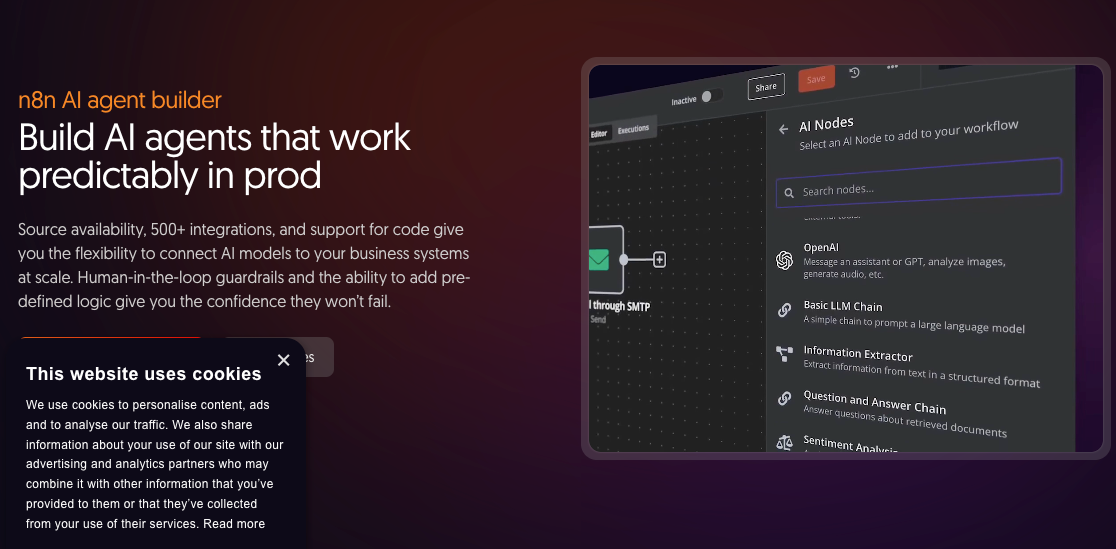
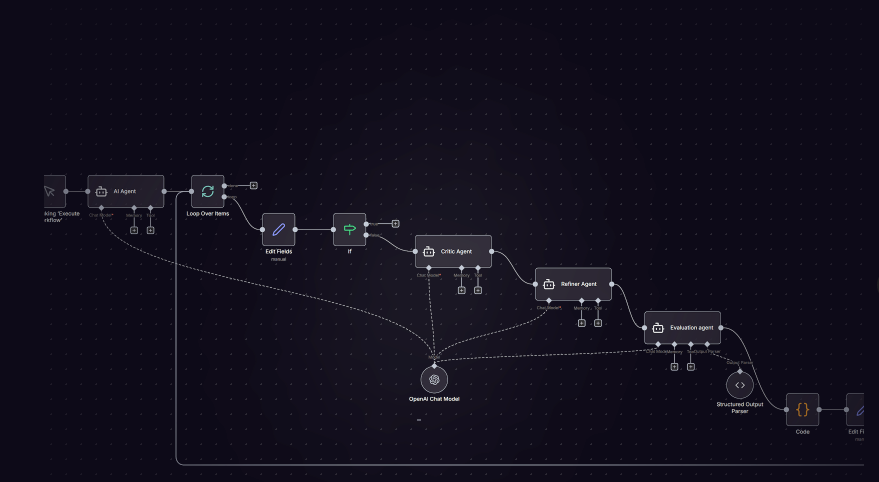
Tools like n8n and Make.com can handle a surprising range of agentic workflows without a single line of custom code. n8n in particular supports memory, tool-use, multi-step reasoning, and integrates with LangChain — all through a visual builder. If your agent needs to read emails, fetch data from a CRM, run an AI step, and send a Slack message? You can likely build that yourself in a weekend, for the cost of API usage.
Make.com's paid plans start at $9/month for 10,000 operations. n8n's cloud tier has removed active workflow limits entirely as of 2025. Neither of these is a toy — real teams use them to run production workflows at scale. If you can describe your use case in a single sentence and the tools needed are common SaaS apps — a development service is probably overkill right now.
When Requirements Are Unclear or Likely to Change
This is the one I see most often go sideways. Someone hires a dev team with a vague idea ("I want an AI agent that handles customer onboarding"), the team builds something specific, and then the actual requirements shift three weeks post-launch. Custom development doesn't handle scope change cheaply. Fixed-price contracts are especially rigid. If you're still in the "figuring it out" phase, prototype with existing tools first. Validate the use case before you commission the build.
The Real Cost Comparison
Let's make this concrete, because price ranges alone don't help you decide anything.
Service Cost vs Tool Cost vs Time Cost
Path | Upfront Cost | Monthly Ongoing | What You're Trading |
|---|---|---|---|
DIY with n8n / Make | $0–$50 setup | $9–$50 (tool) + API usage | Your time to learn and build |
Freelancer / small agency | $5K–$30K | $500–$2K (support retainer) | Speed, but less control |
Mid-tier agency (custom) | $30K–$150K | $2K–$10K | Custom fit, long timeline |
Enterprise build | $150K–$400K+ | Ongoing team cost | Full capability, high risk |
Integration costs are a common budget-buster — connecting an agent to a CRM can add $2K–$5K depending on how customized your setup is, and a typical agent relying on 3–5 external tools can add $800–$900/month in API costs alone. |
The honest calculation: if your use case saves your team 5 hours/week and those hours are worth $100 each, that's $2,000/month in recovered productivity. A $30K build pays back in 15 months. A $150K build? You'd better be very confident in math.
Questions to Ask a Provider Before You Commit
Before signing anything with an AI agent development service , I'd walk through these:
-
What does your discovery process look like? If they can't explain it, that's a red flag.
-
Is the build template-based or fully custom? Both can be fine — just understand what you're paying for.
-
What's included in "maintenance"? Get specifics: bug fixes, prompt updates, model version upgrades?
-
Who owns the code and documentation after handoff? Some agencies retain IP or make you dependent on their stack.
-
Can I see a past build at a similar complexity level? Real examples beat portfolio screenshots.
-
What observability tools are included? If they don't have an answer, ask how you'll debug production issues.
-
What happens if requirements change mid-build? Understand their change management process before it matters.
Okay, that was a lot. Here's the honest summary: custom AI agent development services make sense when your requirements are complex, stable, and the ROI calculation actually closes. For most solo operators and small teams still exploring the space, starting with no-code tools and building toward a clearer use case first is the smarter move.
If you're still in research mode — same. That's probably the right place to be right now.
Previous Posts:
-
See how workflow builders compare to AI workspaces when designing agent systems
-
Understand how no-code automation tools like Gumloop actually perform in real-world agent workflows
-
Learn the practical difference between AI agents and chatbots when scoping automation projects
-
Explore real-world AI agent use cases to validate whether your idea is worth building
-
Understand how AI automation work is priced in the market before hiring a development service
Frequently Asked Questions
When do I actually need to hire an AI agent development service?
What does an AI agent development service actually include — and what's usually left out?
How much does a typical AI agent development project cost?
Can I build an AI agent myself without writing code?
What should I ask a provider before signing?
Will I need to keep paying for maintenance after launch?
https://floatboat.ai/blog/ai-agent-development-services