
TL;DR
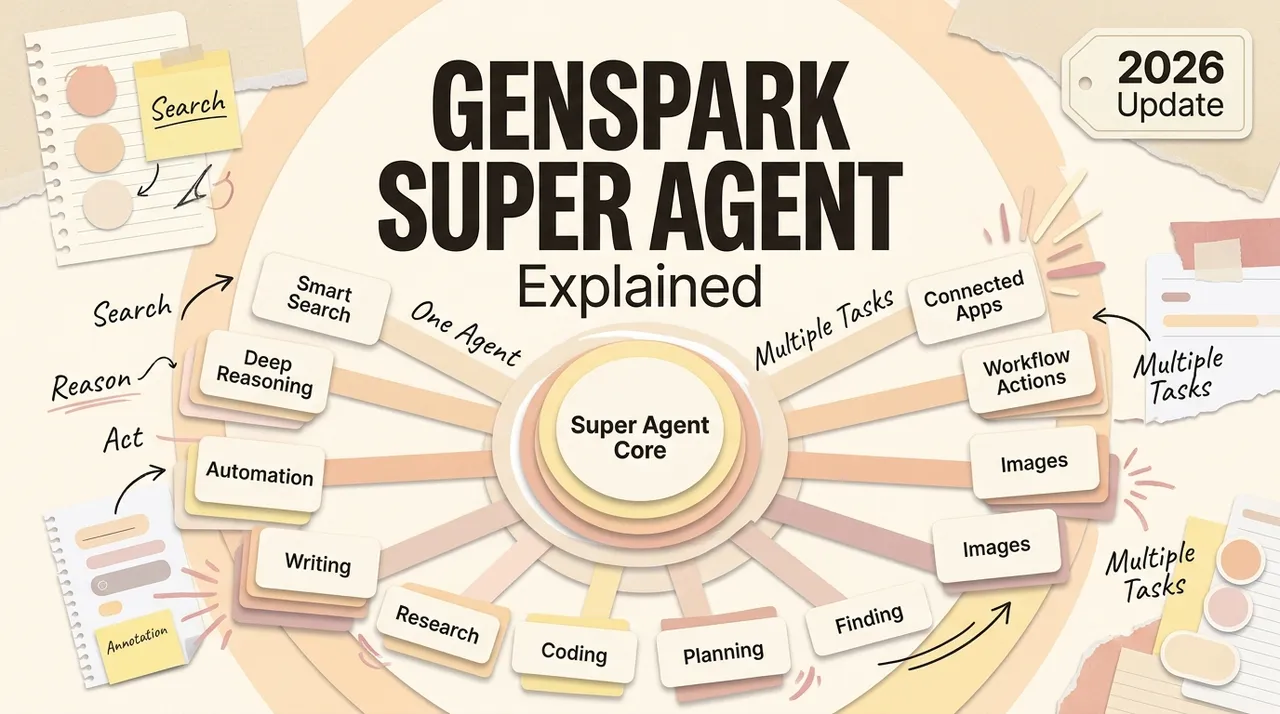
- Genspark Super Agent is a workspace for turning a goal into multi-step research and artifacts. This definition is based on current official product materials checked October 13, 2026, not a claimed personal test.
- Product fit should be measured with a fixed source set, acceptance rubric, permissions log, retries, and credit delta.
- Pricing belongs in the dedicated Genspark pricing guide.
What Genspark Super Agent is
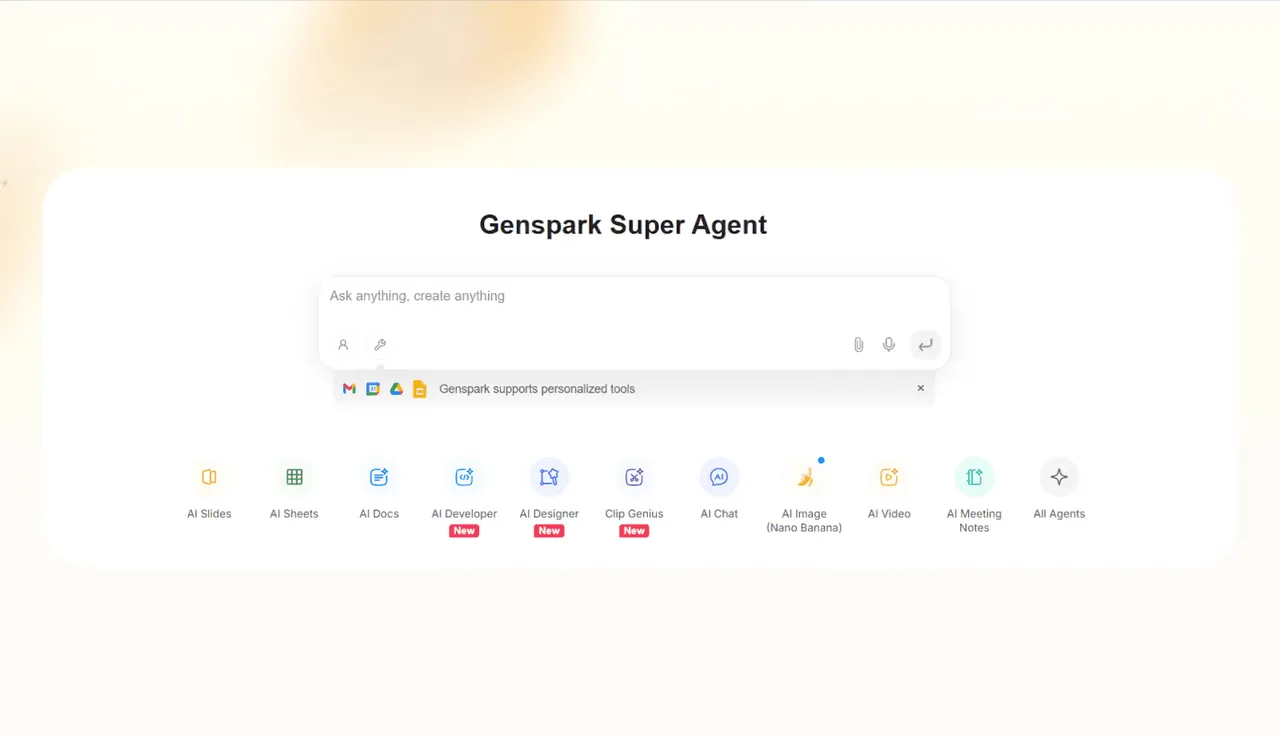
Genspark positions Super Agent as an agentic workspace that can research and create artifacts rather than only return a chat message. Its product pages describe surfaces such as research pages, slides, sheets, and documents. Exact models, integrations, and availability change, so verify them in Genspark’s official site and current help center before procurement.
A useful definition has three parts: it can plan more than one step, invoke documented tools, and return an artifact that can be reviewed. None of those properties proves output quality. Quality requires a repeatable test.
What it is not
It is not evidence that every task benefits from multiple models, and it is not automatically more reliable than a focused chatbot. It is also not a standing autonomous employee: permissions, triggers, review, and recovery still determine whether a run is safe enough for recurring work.
For the broader category boundary, compare AI agents with AI assistants. For another product relationship, Genspark versus Manus focuses on control and delegation.
How to test the core research-to-artifact loop
- Choose one question with a known source set.
- Define required sections, citations, export format, and forbidden sources.
- Record permissions and the starting credit balance.
- Run once without intervention, then review every citation and claim.
- Record retries, correction minutes, ending credits, and export defects.
- Repeat with the same brief in a comparison tool.
Score accepted claims, source coverage, correction time, artifact usability, permission scope, and recovery. Do not score visual polish before factual acceptance.
Capability checklist
| Capability | Evidence to request | Pilot question |
|---|---|---|
| Research synthesis | Current official product/help page | Are citations traceable and current? |
| Slides or documents | Supported export documentation | Does the exported artifact survive editing? |
| Sheets or structured data | Current workspace documentation | Are formulas, types, and sources inspectable? |
| External actions | Official tool and permission documentation | Is approval required before side effects? |
| Reusable agents | Current official configuration documentation | Can scope, tools, and ownership be audited? |
Any optional module should be treated as dynamic and verified directly for permissions, platform support, and plan access before it enters an evaluation.
Original visual references
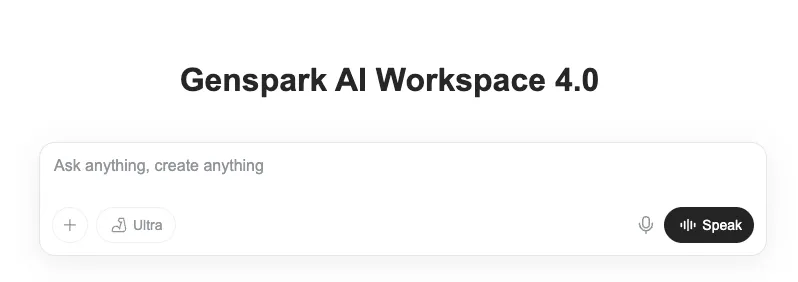
These images are restored from the article's original publication to preserve interface, workflow, and comparison context. Any product UI, pricing, benchmark result, or model availability shown is a historical capture; verify current official information before making a decision.
When it may fit
Genspark is a plausible candidate when work repeatedly ends in a research-heavy artifact and one workspace can reduce handoffs. It is a weaker fit when the job is mainly short conversation, exact deterministic transformation, or work that cannot tolerate broad source retrieval.
The decision rule is simple: adopt it only if the same brief produces an accepted artifact with lower total correction and operating cost than the alternative. Marketing breadth, funding, or a one-off demo is not sufficient evidence.
Related posts

DeepSeek DSH Superagent: From GitHub Requests to Agent Workflows
Understand how DeepSeek's DSH Superagent prototype turns authorized GitHub and Feishu requests into coding tasks, and which workflow…

What Is Gemini Agent? Google's Universal Work Agent Explained
Gemini Agent is Google's universal work agent for persistent tasks, multi-agent coordination, model routing, and work across business…
AI Agent Connectors Explained: MCP, OAuth, and Permissions
Learn how AI agent connectors use MCP, OAuth, scopes, resource permissions, and approval gates—and how to evaluate a connector before it…
https://floatboat.ai/blog/genspark-super-agent-explained