
AI Agents in 2026: What Solo Operators Actually Need to Know
A primary-source timeline of AI agents in 2026, with task-fit, risk and tool-selection guidance plus a four-stage pilot for solo operators.
AI agents matter to a solo operator when they can complete a bounded task through tools, not merely produce an answer. That can mean collecting source material, updating a working file, checking a result, or waiting for approval before the next step.
The important 2026 story is not that every one-person business needs an “AI workforce.” It is that tool access, persistent state, reusable instructions, and evaluation are becoming standard building blocks. That makes small, supervised workflows easier to operate—but it does not remove the need to define the job, protect accounts, or inspect outcomes.
This guide separates evidence from forecasts and gives a practical way to choose one task, assess the risk, and run a pilot.
Evidence checked October 13, 2026: Time-sensitive product examples are linked to primary sources. Treat vendor roadmaps and benchmark claims as directional until verified on your own task.
What changed: an evidence timeline
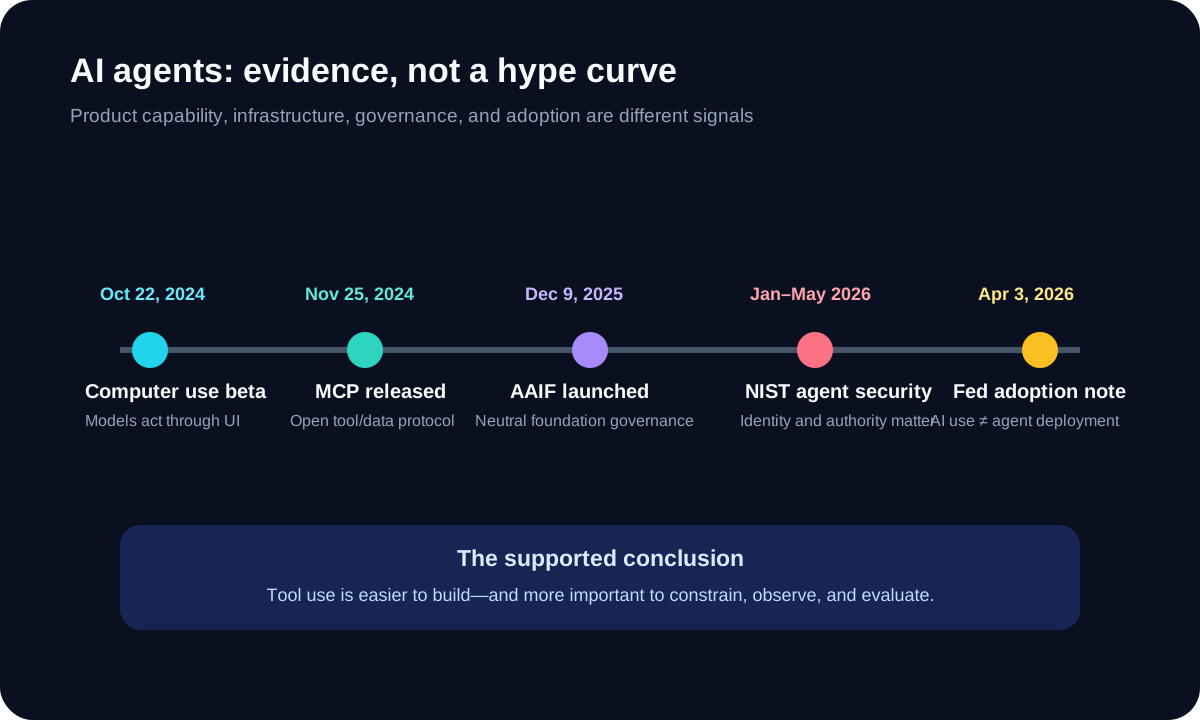
Agent news mixes product launches, usage surveys, technical standards, and forecasts as if they measure the same thing. They do not. The following milestones show what became possible; none proves that a particular solo business should automate a task.
October 22, 2024: computer use entered a public API beta
Anthropic announced computer use for Claude 3.5 Sonnet, allowing developers to direct a model to view a screen, move a cursor, click, and type. This mattered because a model could act through interfaces that lacked a purpose-built API. It was also explicitly a beta, not evidence that arbitrary browser work was safe to leave unattended.
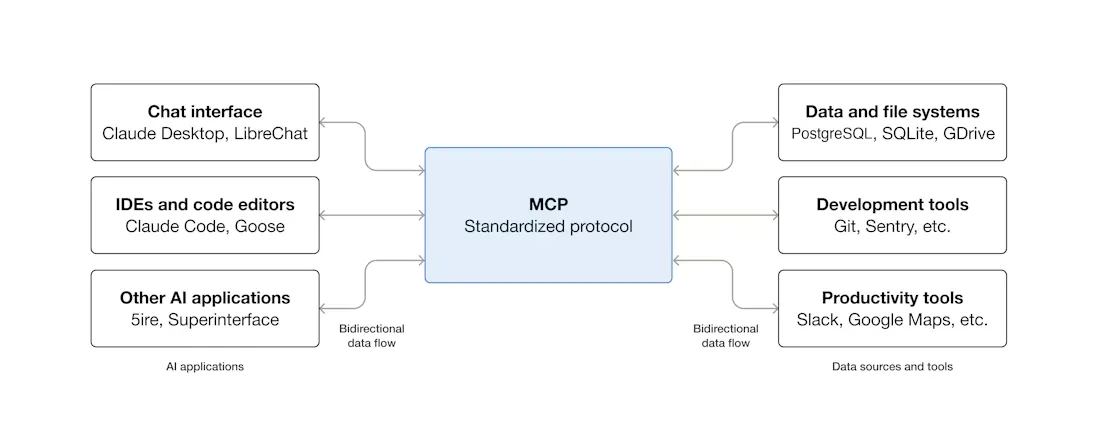
November 25, 2024: MCP was released as an open protocol
Anthropic released the Model Context Protocol to standardize connections between AI applications, data sources, and tools. A shared protocol reduces custom integration work. It does not make every connected server trustworthy, or grant an agent permission to use every exposed action.
December 9, 2025: MCP moved into neutral foundation governance
The Linux Foundation announced the Agentic AI Foundation with MCP, goose, and AGENTS.md as founding contributions. AWS, Anthropic, Block, Bloomberg, Cloudflare, Google, Microsoft, and OpenAI were listed among platinum members. The concrete signal is broad infrastructure participation—not a measured adoption rate for solo operators.
May 2026: agent security became a standards question
NIST’s Center for AI Standards and Innovation issued a request for information about AI-agent security and later published a response analysis. The summary reported broad agreement among respondents that agents introduce distinct threats and that existing cybersecurity practices need adaptation.
April 3, 2026: U.S. adoption data showed why percentages need labels
A Federal Reserve note compared three surveys through 2025. It reported roughly 18% of firms using AI at year-end 2025 and about 41% of individuals using generative AI for work in November 2025. A senior-leader survey yielded still another measure. The authors explain that sampling, unit of analysis, wording, and reporting bias can drive the gaps.
Those figures are about AI or generative-AI adoption—not autonomous agents. They show growing exposure, while warning against turning unlike measurements into one dramatic “agent adoption” number.
What counts as an agent for practical work?
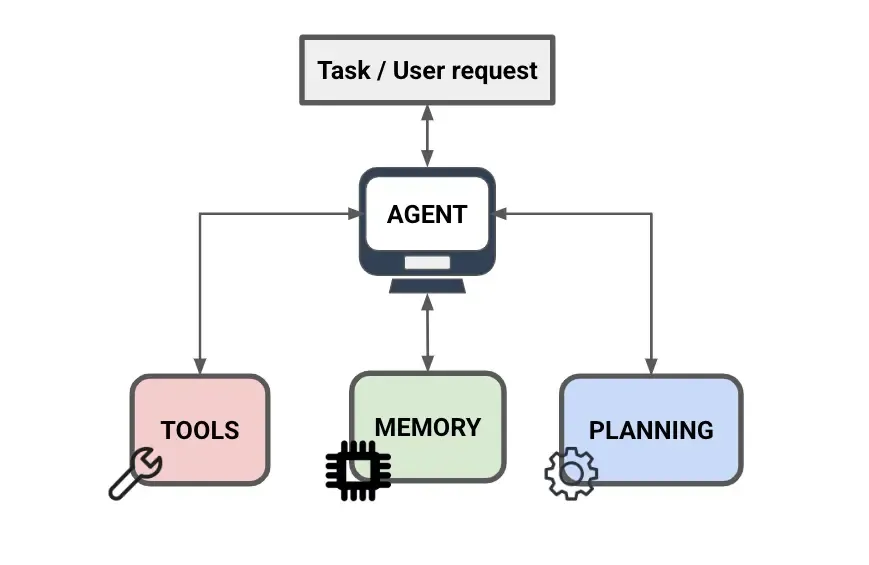
Anthropic’s Building Effective Agents guide defines an agent as a model that directs its own process and tool use rather than following only a fixed script. It distinguishes agents from workflows, where tools and models follow predefined code paths.
For a solo operator, that distinction creates three implementation choices:
| Pattern | Control flow | Best use | Main risk |
|---|---|---|---|
| Single model call | One bounded transformation | summarize, classify, draft | unsupported output |
| Deterministic workflow | Steps and branches defined in advance | recurring reports, file conversion, routing | integration and retry failures |
| Agent | Model chooses steps or tools within limits | variable research, triage, troubleshooting | unintended action and hard-to-test paths |
Choose the least autonomous pattern that can do the job. Anthropic’s engineering guidance makes the same general point: workflows offer predictability for well-defined tasks, while agents add flexibility at the price of latency, cost, and complexity.
Which solo-operator tasks fit?
A useful task has a stable objective, accessible inputs, visible outputs, and a manageable failure cost.
Strong early candidates
Research collection with source review. Let the system gather candidate sources, record dates and links, deduplicate them, and prepare a brief. Keep interpretation and publication under review.
Document preparation. Convert inputs into a structured draft, update a worksheet, or assemble a recurring report. Deterministic validation can check required fields before delivery.
Inbox or request triage. Classify incoming items and prepare a proposed route. Start without auto-sending or changing customer records.
Monitoring with a quiet default. Check a specified source on a schedule and notify only when a defined condition changes. Store the evidence that triggered the alert.
Pre-flight checks. Verify that assets, links, metadata, or required attachments are present before a human publishes or sends.
Poor early candidates
Avoid beginning with payments, contracts, public claims, account deletion, pricing changes, medical or legal advice, irreversible customer communication, or broad inbox/browser access. These may eventually use agents, but they require stronger identity, approval, audit, recovery, and incident controls than a first pilot should carry.
Also avoid tasks you cannot describe or evaluate. An agent does not repair an unclear process; it makes unclear decisions faster.
The risk model a one-person business needs
You do not need an enterprise committee, but you do need to name the failure modes.
1. Wrong result
The agent may misclassify, omit a requirement, invent a source, or follow stale context. Require citations where factual claims matter and use deterministic checks for formats, totals, dates, and required fields.
2. Wrong action
An agent can select the wrong recipient, modify the wrong record, or act before the task is complete. Separate read and write tools. Put consequential writes behind approval, and show the proposed action—not only a vague confirmation message.
3. Prompt injection and hostile content
Web pages, emails, documents, and tool results can contain text that tries to redirect an agent. NIST’s 2026 work treats the combination of model output and software authority as a distinct security concern. Treat external content as data, restrict tools by policy, and never let retrieved text grant new permissions.
4. Credential and data exposure
Connecting a tool can expose mailboxes, files, customer data, or publishing accounts. Use a dedicated account where possible, narrow OAuth scopes, separate personal and business data, and remove unused connectors.
5. Invisible failure
Background execution can fail quietly or loop. Keep traces of model calls, tool calls, decisions, status, and usage. OpenAI’s current agent documentation, for example, exposes session traces with recorded inputs, outputs, duration, and status, and its evaluation guide recommends trace grading to find tool-choice, handoff, and policy failures. Whatever product you choose, demand equivalent evidence.
6. Cost and attention drift
Agent costs include model usage, searches, tool actions, retries, subscriptions, and review time. A workflow that saves keystrokes but generates daily exceptions is not leverage.
A task-fit scorecard
Score a candidate task from 0 to 2 on each question:
- Frequency: rare (0), monthly (1), weekly or more (2)
- Specification: subjective (0), partly defined (1), clear inputs and acceptance rules (2)
- Verification: expensive or impossible (0), sampled review (1), cheap deterministic or human check (2)
- Reversibility: irreversible (0), recoverable with effort (1), draft/sandbox/undoable (2)
- Permission scope: broad admin access (0), limited write (1), read-only or isolated (2)
- Failure impact: legal/financial/reputational (0), operational delay (1), low-impact draft error (2)
- Evidence: no trace (0), basic log (1), source and action trace (2)
A high total does not authorize deployment; it identifies a reasonable pilot. Any zero in reversibility, permission scope, or failure impact should keep the first version in draft or sandbox mode.
How to run a four-stage pilot
Stage 1: establish the manual baseline
Run the task manually several times. Record input types, completion time, exceptions, output standard, and the decisions that require judgment. If the process changes every run, stabilize it before adding an agent.
Stage 2: build a shadow run
Let the system process real inputs without taking external action. Compare its proposed output with the result you actually used. Create test cases for missing data, conflicting instructions, duplicates, stale sources, tool failure, and malicious content.
Stage 3: allow reversible actions
Permit writes only to a staging folder, draft queue, test calendar, or isolated database. Add a run limit, time limit, spending cap, and stop condition. Require approval before messages, publication, purchases, or changes to a system of record.
Stage 4: review operating evidence
Measure accepted-output rate, correction time, missed exceptions, unsafe actions, duplicate writes, latency, direct cost, and attention spent supervising. Rerun the test set after changing a model, prompt, tool, or workflow.
Expand only if the workflow reduces total effort without increasing unacceptable risk.
How to choose a tool without chasing the market
Start with the task and operating boundary, then compare products.
- Connections: Does it support the exact action and authentication mode you need—not merely the app logo?
- Control: Can you restrict tools, domains, runs, spend, and write actions?
- State: Can it pause, resume, and avoid repeating an external action?
- Evidence: Can you inspect sources, tool arguments, outputs, approvals, and failures?
- Evaluation: Can you rerun a fixed dataset and compare versions?
- Data: Where do prompts, files, traces, and credentials go, and how are they deleted?
- Exit: Can you export instructions, workflow logic, data, and logs in usable formats?
Do not select on an integration count, an “autonomy” label, or an unsourced leaderboard. Commercial terms and capabilities change; verify the current product documentation before purchase.
What a useful 2026 strategy looks like
For most solo operators, the winning strategy is deliberately small:
- choose one repeated, low-consequence task;
- keep the first version read-only or draft-only;
- package the sources, criteria, and output contract;
- require human approval at the boundary of consequence;
- retain enough evidence to diagnose failures;
- measure accepted outcomes and review time for several cycles;
- remove the workflow if supervision costs more than it saves.
The companion guide on AI workflows for solo founders helps document the process before automation. If the task needs durable project knowledge, read the LLM knowledge-base guide. For examples that separate genuine leverage from demos, see real AI agent use cases.
Original visual references
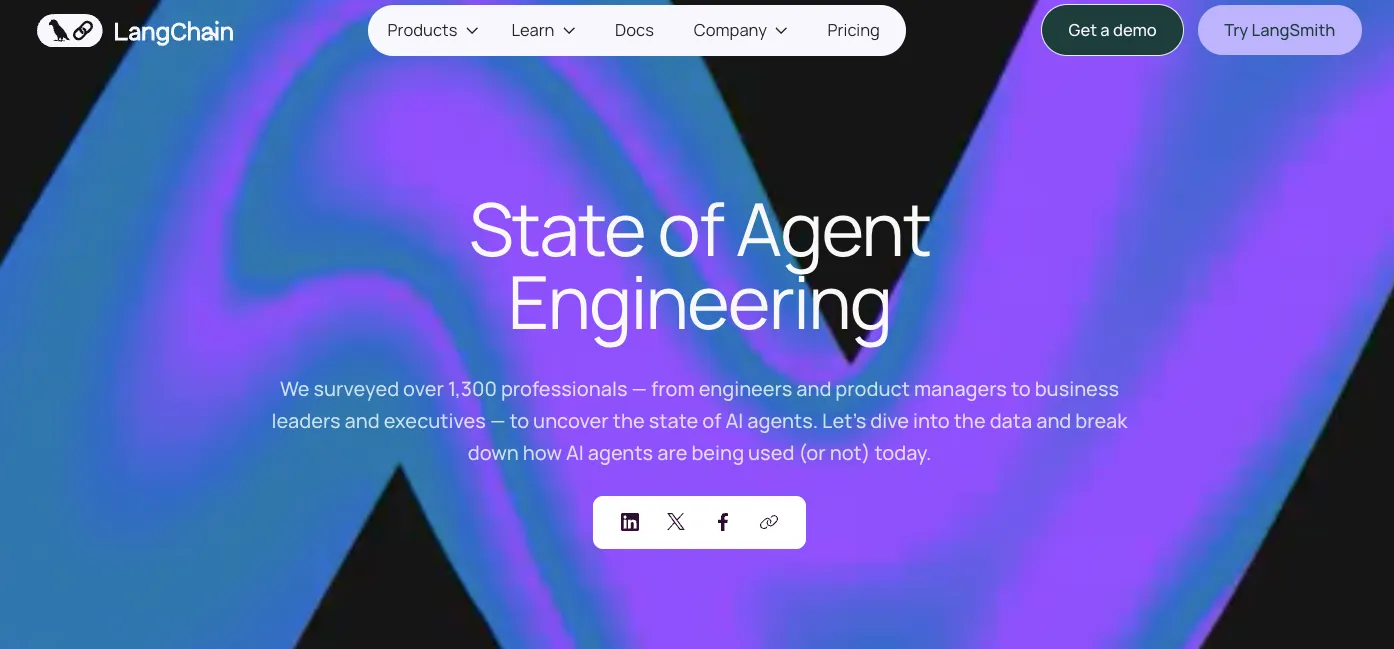
These images are restored from the article's original publication to preserve interface, workflow, and comparison context. Any product UI, pricing, benchmark result, or model availability shown is a historical capture; verify current official information before making a decision.
Bottom line
The 2026 evidence supports a narrower conclusion than the headlines: models gained more ways to use tools; open standards gained institutional backing; AI use at work increased; and security bodies began treating agent identity, authorization, and tool access as a distinct governance problem.
That is enough reason for a solo operator to test one bounded workflow. It is not evidence that every business needs autonomous agents or that deployment statistics from enterprises translate to one-person companies.
Use an agent where variable inputs require bounded judgment. Use a deterministic workflow where the path is known. Use a single model call where that is enough. The goal is not maximum autonomy; it is dependable work with a failure mode you can afford.
Related posts
The Markdown Resume — Maintain One Source, Export Every Format
Keep your resume as one Markdown source and export print-ready PDF, Word, and web on demand — structure, git history, and what ATS parsing…
Markdown for Note-Taking — A Workflow That Outlives Any App
A markdown note-taking workflow built on plain files: naming, structure, links, and AI review. Why plain text outlives any app, and how to…
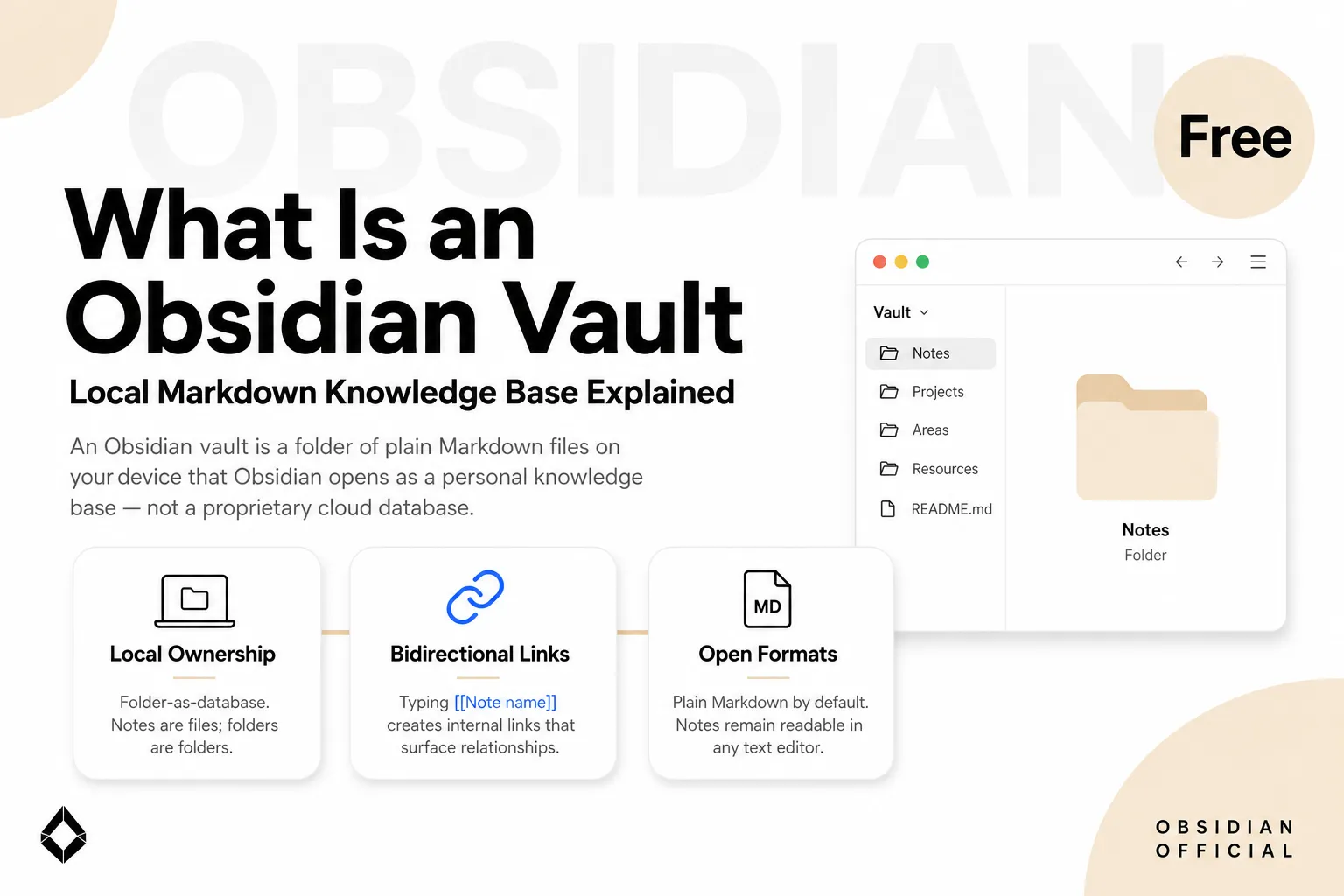
What Is an Obsidian Vault? Files, Settings, and Boundaries
An Obsidian vault is a local folder containing Markdown notes, attachments, and vault-specific settings. Learn what lives inside it, what…
https://floatboat.ai/blog/ai-agents-2026-solo-operators