
Solopreneur Pricing: Why You Should Charge from Day One
Create a bounded paid offer, choose a pricing basis, calculate a defensible floor, and test the first solopreneur price without pretending it is final.
Solopreneur pricing from day one does not require a perfect number. It requires a paid, bounded offer that tests whether a specific customer values a specific outcome. The first price is a hypothesis; scope, evidence, and revision rules make it testable.
Information checked October 13, 2026.
When “charge from day one” applies
Charge once you can state the customer, problem, deliverable, boundaries, and decision date. A free discovery call, sample, or limited diagnostic may still be appropriate. Do not charge for an undefined experiment as if the outcome were proven, and do not use free delivery when the question is willingness to pay.
Build the first offer before choosing a number
Write one page containing:
- the customer and situation;
- the deliverable and acceptance criteria;
- included inputs, meetings, and revisions;
- exclusions and customer responsibilities;
- timeline and payment schedule;
- cancellation, refund, and change rules.
Price cannot compensate for ambiguous scope. If two buyers interpret the offer differently, clarify the package before collecting more pricing data.
Choose a pricing basis
Hourly works when scope is uncertain and time is the clearest unit, but rewards efficiency poorly and needs time boundaries.
Project pricing fits a defined deliverable. Include assumptions and a change process so extra work does not become invisible.
Retainers or subscriptions fit recurring access or output only when capacity, response time, and unused entitlement are clear.
Usage pricing can align cost with consumption but must explain the unit, overages, and predictability.
Value-informed pricing uses the customer’s alternatives and expected impact as evidence, but should not promise a return you cannot control.
The appropriate structure depends on the offer, not on a universal “best” method. Intuit’s overview of common pricing strategies is a useful taxonomy, not a price calculator.

Set the first number
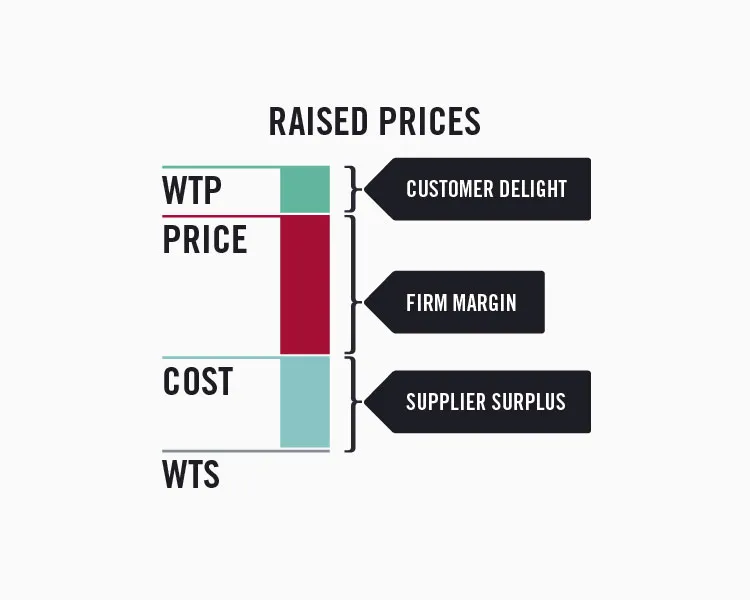
Calculate a floor from direct costs, required owner time, taxes and overhead assumptions, rework allowance, and minimum acceptable contribution. Then compare alternatives the buyer could choose and conduct customer conversations about the cost of the current problem. Pick a number you can explain from scope and constraints.
Offer the same package to a small set of comparable prospects. Record acceptance, objections, time delivered, rework, support, and outcome. Do not interpret one yes or no as a market rule.
Raise, lower, or redesign?
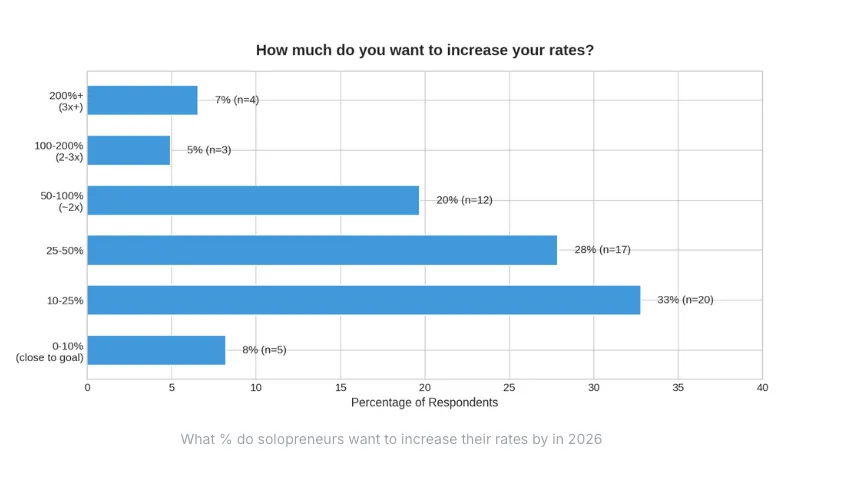
Raise the price when qualified demand exceeds capacity, outcomes are consistent, or the package has gained meaningful scope. Lowering price is only one response to low conversion; the buyer, promise, proof, channel, or package may be wrong. If delivery repeatedly exceeds the boundary, redesign scope before changing price.
Pricing evidence becomes especially valuable while finding the first 100 customers. Later, use the unit-economics approach in scaling without hiring to test whether price supports sustainable capacity.
Original visual references
These images are restored from the article's original publication to preserve interface, workflow, and comparison context. Any product UI, pricing, benchmark result, or model availability shown is a historical capture; verify current official information before making a decision.
Review every quarter
Review conversion by buyer segment, common objections, actual delivery and support time, rework, direct cost, margin contribution, refunds, and which outcomes customers reference. The goal is not endless price increases. It is a price and package that the right customer understands and the business can deliver responsibly.
Related posts
The Markdown Resume — Maintain One Source, Export Every Format
Keep your resume as one Markdown source and export print-ready PDF, Word, and web on demand — structure, git history, and what ATS parsing…
Markdown for Note-Taking — A Workflow That Outlives Any App
A markdown note-taking workflow built on plain files: naming, structure, links, and AI review. Why plain text outlives any app, and how to…
What Is an Obsidian Vault? Files, Settings, and Boundaries
An Obsidian vault is a local folder containing Markdown notes, attachments, and vault-specific settings. Learn what lives inside it, what…
https://floatboat.ai/blog/solopreneur-pricing-day-one