Where Was the World Cup 2026 Held? All 16 Host Cities
The 2026 FIFA World Cup was held across 16 host markets in Canada, Mexico, and the United States. See every city and stadium, the country split, and where the opening match, semifinals, bronze match, and final took place.
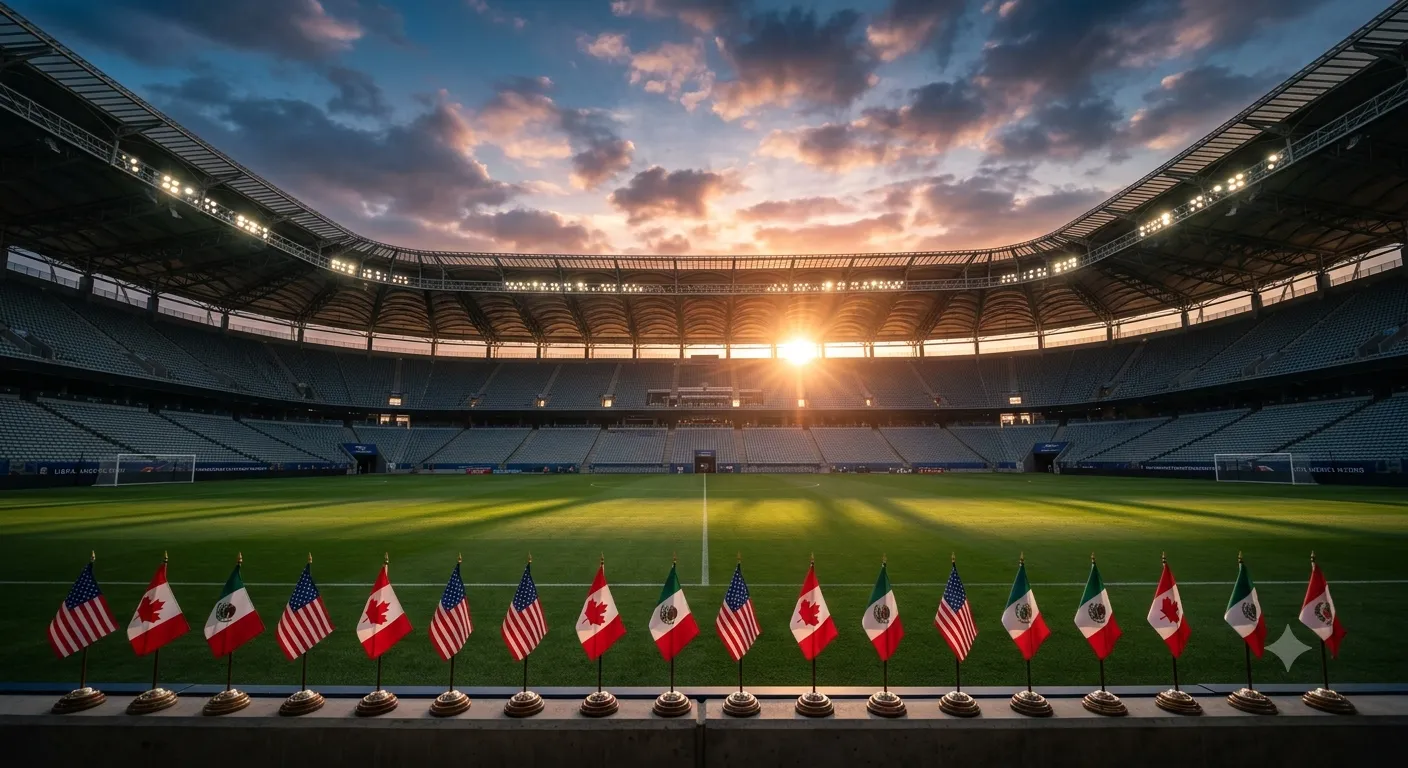
The 2026 FIFA World Cup was held in Canada, Mexico, and the United States from June 11 to July 19, 2026. Sixteen host markets staged 104 matches: two in Canada, three in Mexico, and eleven in the United States. Spain won the final 1–0 after extra time against Argentina at New York New Jersey Stadium.
That answer needs one important qualification: FIFA’s “host city” labels often described a metropolitan market, not the municipality printed on a stadium’s street address. Boston’s venue was in Foxborough, Dallas’s in Arlington, and New York New Jersey’s in East Rutherford. The list below separates the tournament label from the physical location.
Information checked October 13, 2026. Tournament status and results are final; venue names follow FIFA’s official event naming.
The country split
FIFA’s official tournament overview lists the three-country distribution:
| Host country | Host markets | Share of the 16 markets |
|---|---|---|
| Canada | 2 | 12.5% |
| Mexico | 3 | 18.75% |
| United States | 11 | 68.75% |
It was the first men’s World Cup organized across three countries. The expanded 48-team format produced 104 matches rather than the 64 used in the previous 32-team tournament.
All 16 host cities and stadiums
FIFA used neutral tournament names for many venues instead of their everyday commercial names. Those are the names preserved in official schedules and results.
| Country | FIFA host market | FIFA tournament venue | Physical locality |
|---|---|---|---|
| Canada | Toronto | Toronto Stadium | Toronto, Ontario |
| Canada | Vancouver | BC Place Vancouver | Vancouver, British Columbia |
| Mexico | Guadalajara | Estadio Guadalajara | Zapopan, Jalisco |
| Mexico | Mexico City | Mexico City Stadium | Mexico City |
| Mexico | Monterrey | Estadio Monterrey | Guadalupe, Nuevo León |
| United States | Atlanta | Atlanta Stadium | Atlanta, Georgia |
| United States | Boston | Boston Stadium | Foxborough, Massachusetts |
| United States | Dallas | Dallas Stadium | Arlington, Texas |
| United States | Houston | Houston Stadium | Houston, Texas |
| United States | Kansas City | Kansas City Stadium | Kansas City, Missouri |
| United States | Los Angeles | Los Angeles Stadium | Inglewood, California |
| United States | Miami | Miami Stadium | Miami Gardens, Florida |
| United States | New York New Jersey | New York New Jersey Stadium | East Rutherford, New Jersey |
| United States | Philadelphia | Philadelphia Stadium | Philadelphia, Pennsylvania |
| United States | San Francisco Bay Area | San Francisco Bay Area Stadium | Santa Clara, California |
| United States | Seattle | Seattle Stadium | Seattle, Washington |
FIFA’s stadium guide is the appropriate source for event names and venue details. Commercial stadium names can change; the tournament labels are what tie a historical result to the official match record.
Where the opening match and final rounds were played
The geography was not evenly interchangeable. FIFA assigned the tournament’s signature matches to specific venues. The scores below follow FIFA's completed fixtures and results; FIFA also published dedicated reports for the bronze match and final.
| Stage | Date | Venue | What happened |
|---|---|---|---|
| Opening match | June 11 | Mexico City Stadium | Mexico beat South Africa 2–0 |
| First semifinal | July 14 | Dallas Stadium | Spain beat France 2–0 |
| Second semifinal | July 15 | Atlanta Stadium | Argentina beat England 2–1 |
| Bronze match | July 18 | Miami Stadium | England beat France 6–4 |
| Final | July 19 | New York New Jersey Stadium | Spain beat Argentina 1–0 after extra time |
Mexico City Stadium became the first venue to stage a men’s World Cup opening match for the third time, after 1970 and 1986. New York New Jersey Stadium hosted the final in East Rutherford, not in New York City. The official match-schedule announcement also records that Dallas received nine matches, the most of any host market.
For the complete knockout route and scores, use the finished World Cup 2026 bracket. If you want to understand how paths and prediction methods held up after the results, the separate World Cup bracketology audit handles that analytical job.
Why the host map was organized in regions
The venue network stretched from Vancouver to Mexico City and from the San Francisco Bay Area to Boston. It was not realistic to treat all 16 markets as stops on one continuous road trip.
FIFA said the majority of matches were arranged in eastern, central, and western zones, and that three rest days were preserved for teams in 103 of the 104 matches. That regional logic reduced some travel, but progression still moved teams between cities. A bracket path was therefore also a travel path.
Looking back, the cleanest way to reconstruct the tournament is to pair three records:
- the official results for opponents and scores;
- the FIFA venue name for the historical match record;
- the physical municipality for maps, transport, and local archives.
The short answer
World Cup 2026 took place across 16 host markets in three countries: Toronto and Vancouver in Canada; Guadalajara, Mexico City, and Monterrey in Mexico; and Atlanta, Boston, Dallas, Houston, Kansas City, Los Angeles, Miami, New York New Jersey, Philadelphia, the San Francisco Bay Area, and Seattle in the United States.
The tournament opened in Mexico City and ended in East Rutherford, New Jersey, where Spain became world champion on July 19, 2026.
Related posts

What If Your Calendar Could Run Itself? Calendar-Driven AI
Explore calendar-driven AI as a design pattern: events trigger reviewable preparation or follow-up workflows, with explicit permissions,…
World Cup 2026 Bracket: Complete Knockout Results and Final Path
The completed 2026 World Cup bracket from the Round of 32 to the final: every knockout result, Spain's title path, bracket rules, and…
World Cup 2026 Bracketology: A Post-Tournament Audit
World Cup 2026 is over, so bracketology now means auditing the path and your reasoning. Review the completed quarterfinals, semifinals, and…
https://floatboat.ai/blog/where-is-world-cup-2026-host-cities