
World Cup 2026 Bracketology: A Post-Tournament Audit
World Cup 2026 is over, so bracketology now means auditing the path and your reasoning. Review the completed quarterfinals, semifinals, and final, then use a hindsight-resistant method to grade old picks.
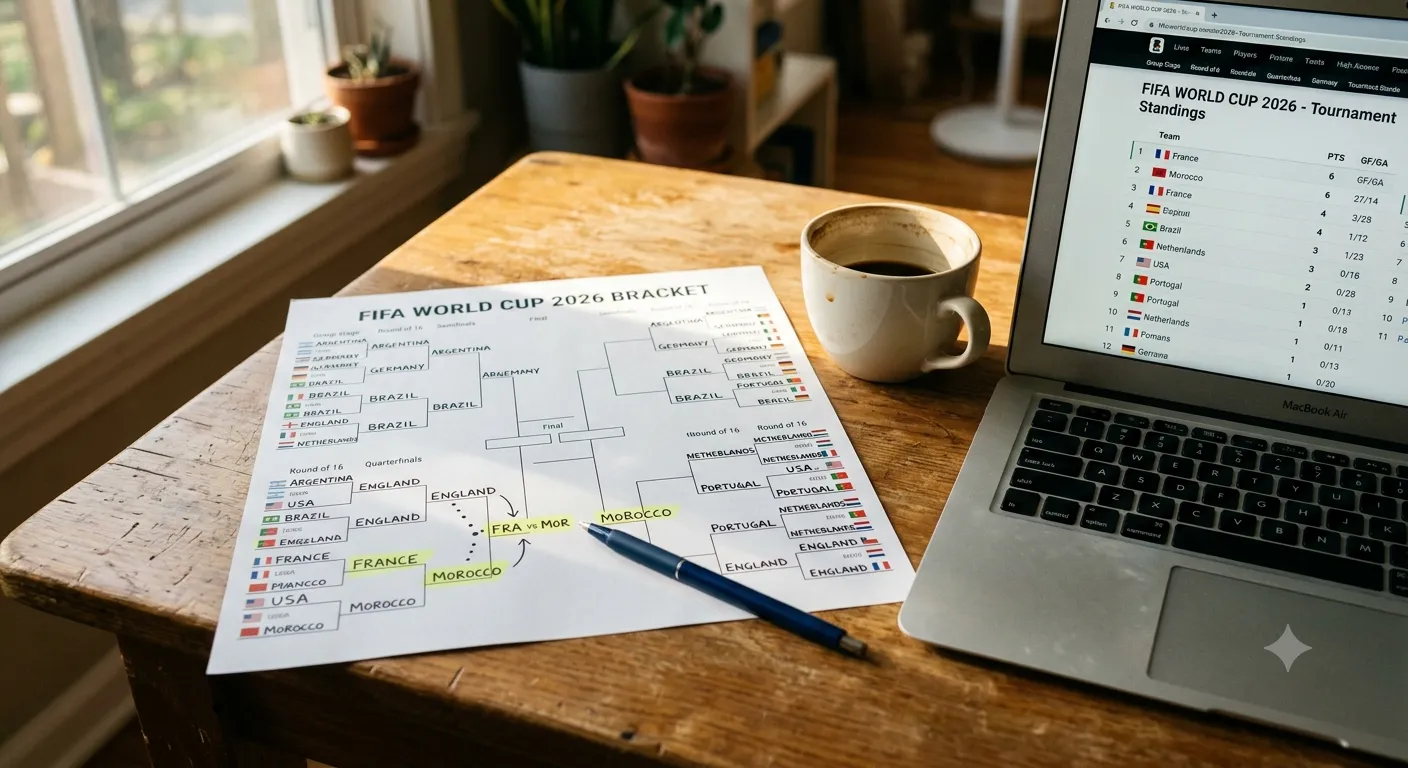
World Cup 2026 bracketology is no longer a forecasting exercise. The tournament ended on July 19, 2026, with Spain beating Argentina 1–0 after extra time. The useful task now is to compare the completed path with the logic behind your old bracket—without rewriting your prediction after the answer is known.
That makes bracketology different from a results page. The completed World Cup 2026 bracket is the factual record. This article is a method for asking whether a pick was well reasoned, well calibrated, and sensitive to the route each team actually faced.
Information checked October 13, 2026. All match results below are final and sourced from FIFA’s official post-tournament records.
The completed path from the quarterfinals
FIFA’s official knockout-stage results record the final eight as follows:
| Round | Match | Result |
|---|---|---|
| Quarterfinal | France vs Morocco | France 2–0 Morocco |
| Quarterfinal | Spain vs Belgium | Spain 2–1 Belgium |
| Quarterfinal | Norway vs England | England 2–1 after extra time |
| Quarterfinal | Argentina vs Switzerland | Argentina 3–1 after extra time |
| Semifinal | France vs Spain | Spain 2–0 France |
| Semifinal | England vs Argentina | Argentina 2–1 England |
| Final | Spain vs Argentina | Spain 1–0 after extra time |
Spain’s championship route through the last three rounds was Belgium, France, and Argentina. Argentina reached the final through Switzerland and England before losing in extra time. FIFA’s final report records Ferran Torres scoring the decisive goal in the 106th minute.
Those facts settle what happened. They do not automatically settle whether a pre-match judgment was good.
A correct pick can still be weak analysis
Suppose you chose Spain to beat Argentina because “Spain always wins big games.” The champion was right, but the reason was vague and impossible to test. Now suppose you chose Argentina, while noting that Spain’s control and depth made the final close and that extra time was plausible. The result was wrong, but the analysis may have identified the match’s real uncertainty.
This distinction is the heart of a useful audit:
- Outcome accuracy: Did the selected team advance?
- Path accuracy: Did you understand who the winner would have to beat next?
- Reason accuracy: Did the match behave for the reasons you named?
- Confidence calibration: Did “high,” “medium,” and “low” confidence picks fail at appropriately different rates?
Do not collapse those four questions into a single win-loss score. Office pools reward outcomes; better future analysis requires examining the process.
How to audit an old bracket without hindsight bias
1. Freeze the original
Use the timestamped screenshot, PDF, message, or saved bracket you made before the matches. Do not repair team names, confidence labels, or explanations now. If no original survives, you can study the tournament path, but you cannot honestly score your own forecast.
2. Mark picks before reading your notes
Record only whether each team advanced as predicted. This prevents a persuasive explanation from changing the outcome score.
3. Re-read the reason as a falsifiable claim
“France are better” is not enough. “France can control Morocco without exposing transition space” is a claim you can compare with the match. Good notes mention a mechanism: pressing, set pieces, depth, recovery time, or the likely game state.
4. Grade confidence, not just correctness
A low-confidence miss is ordinary uncertainty. A high-confidence miss deserves investigation. If all picks were labeled high confidence, the bracket contained no real calibration.
5. Follow the downstream damage
One incorrect quarterfinal pick can invalidate a semifinal and final branch. Count the first mistaken assumption separately from its consequences. Otherwise one early upset makes the whole audit look less informative than it is.
A compact bracketology scorecard
Use a small table rather than a single percentage:
| Dimension | Question | Suggested note |
|---|---|---|
| Result | Did the team advance? | Correct / incorrect |
| Confidence | How strong was the original belief? | High / medium / low |
| Mechanism | Did the named tactical or physical factor appear? | Yes / partly / no |
| Path | Did the next-round opponent match the assumed route? | Intact / changed |
| Update | What evidence should change the next prediction? | One sentence |
The final column prevents the exercise from becoming self-congratulation or self-punishment. The point is to carry one concrete lesson forward.
What the 2026 bracket exposes
Bracketology is not a power ranking
Belgium and Spain could not both reach the semifinal because they met in the quarterfinal. France and Spain could not both reach the final because their paths collided next. Ranking the strongest teams without tracing the branch produces impossible final fours.
Extra time is part of the path
England and Argentina both needed extra time in their quarterfinals. Argentina then played a normal-time semifinal and extra-time final. The completed bracket shows why “who advances?” is not the only path question; how a team advances can shape the recovery problem that follows. It does not prove fatigue caused a later result, but it tells you what should have been monitored.
Venue and route are context, not destiny
The knockout rounds moved across a continent-sized host network. The 16 World Cup host markets help reconstruct travel and location, but a city name alone does not explain a score. Travel belongs in an analysis only when paired with rest windows, previous match duration, and a plausible mechanism.
A scoreline does not preserve the whole argument
The final score can confirm the winner while hiding how close the original risk assessment was. Archive the reason beside the pick. Without it, a bracket becomes a list of guesses that teaches nothing after the tournament.
A reusable method for the next knockout tournament
Before each round, do five things:
- Copy the official bracket rather than reconstructing it from memory.
- Evaluate the current matchup before choosing a champion.
- Write one mechanism and one counterargument for every close match.
- Assign confidence before kickoff and never edit it afterward.
- Save a timestamped version, then audit the first wrong assumption after the round.
This method will not make football predictable. It makes your uncertainty visible and your post-tournament learning honest.
What bracketology means after July 19
Before the tournament ended, bracketology asked which routes looked easier and where an upset might change the field. After Spain lifted the trophy, its job changed: preserve the original forecast, compare it with the official path, and separate a lucky result from a sound argument.
Use FIFA and the finished bracket for facts. Use a scorecard for judgment. And treat any betting or financial decision as outside the scope of this editorial exercise; a more disciplined bracket is still not a guarantee of future results.
Related posts
What If Your Calendar Could Run Itself? Calendar-Driven AI
Explore calendar-driven AI as a design pattern: events trigger reviewable preparation or follow-up workflows, with explicit permissions,…
Where Was the World Cup 2026 Held? All 16 Host Cities
The 2026 FIFA World Cup was held across 16 host markets in Canada, Mexico, and the United States. See every city and stadium, the country…
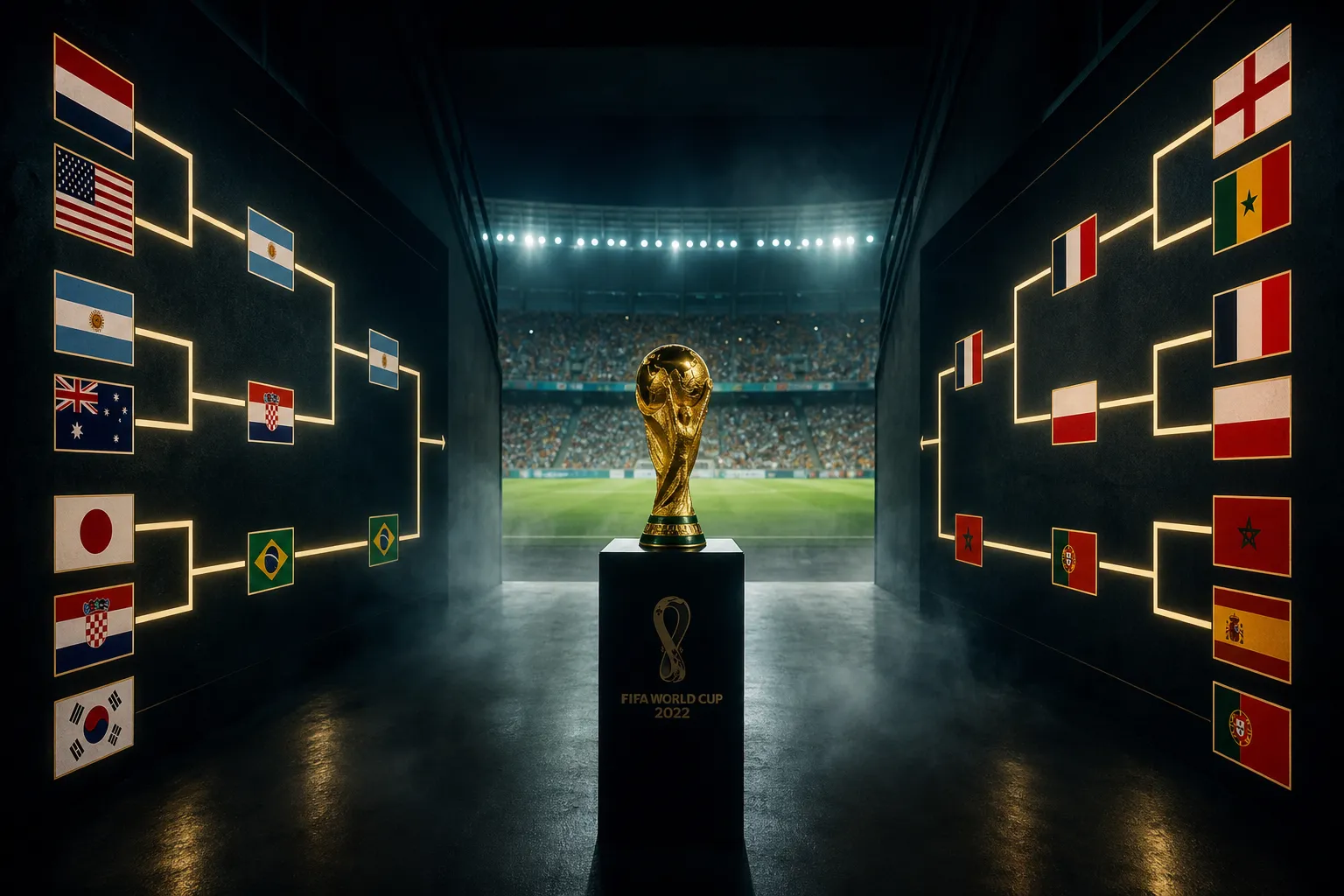
World Cup 2026 Bracket: Complete Knockout Results and Final Path
The completed 2026 World Cup bracket from the Round of 32 to the final: every knockout result, Spain's title path, bracket rules, and…
https://floatboat.ai/blog/world-cup-2026-bracketology